
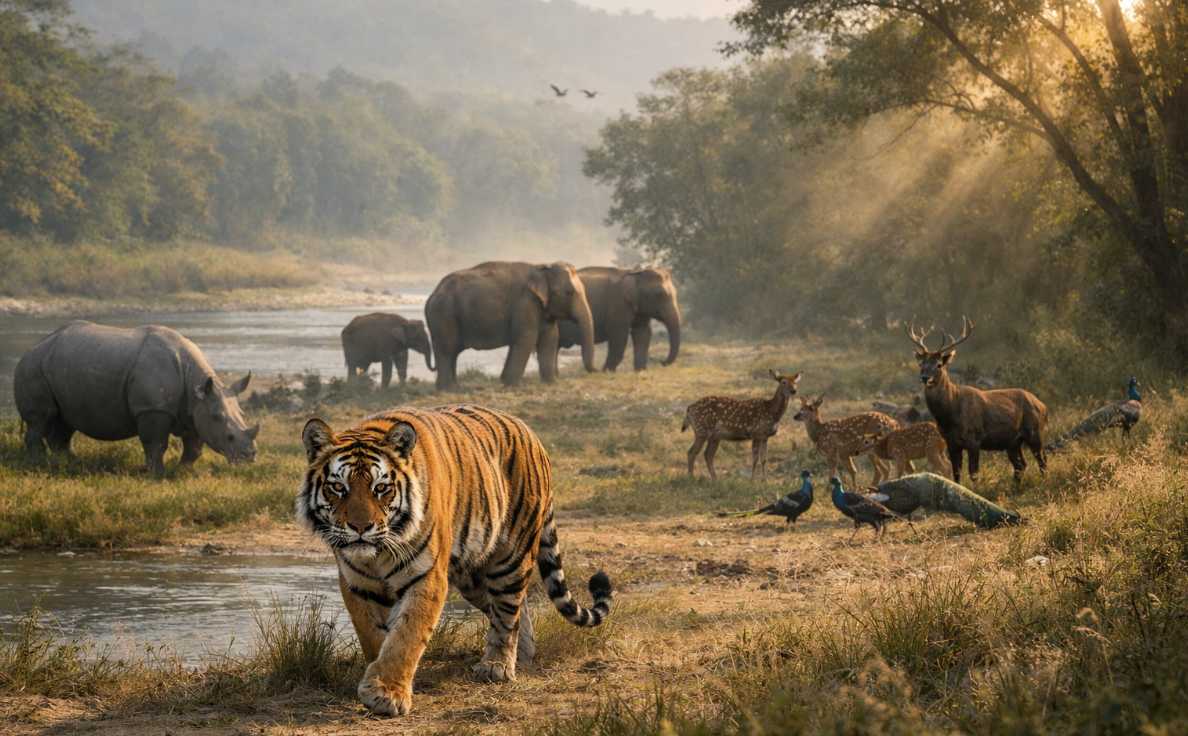
India is one of the best countries in the world if you feel a strong connection with the wildlife in nature. Here, you can find everything, like dense forests, open grasslands, and unforgettable wildlife experiences.
National Parks in India take care of the rare animals and offer you an opportunity to give you a chance to see wildlife in their natural habitats. So, if you love nature, adventure, and photography, this list of the Top 12 national parks in India will help you plan the perfect trip.
Top 12 national parks in India and their location
These national parks are spread across different states and landscapes. Each National park offers you a rare opportunity to explore forests, unique animals, and safari experiences. Below is a simple and detailed guide to help you choose the right wildlife destination for your upcoming tour.
1. Jim Corbett National Park in Uttarakhand
Jim Corbett National Park is located in Uttarakhand, near the town of Ramnagar. It is famous for tigers, elephants, rich birdlife, and river landscapes. The park is best visited between October and June. A stay of 2 to 3 days is ideal to explore different zones. Entry fees start from ₹100 for Indians and ₹1000 for foreigners, with vehicle charges extra. The biggest highlight is spotting tigers in the riverine forests of Dhikala.
Why Visit Jim Corbett National Park in Uttarakhand?
This National park is India’s oldest protected forest and the birthplace of Project Tiger. It offers a mix of rivers, grasslands, and dense sal forests. It is perfect for families, wildlife photographers, bird watchers, and solo travelers. Seeing tigers, elephants, and crocodiles near water bodies makes every safari exciting.
Location & How to Reach
Jim Corbett National Park is in the Nainital and Pauri Garhwal districts of Uttarakhand.
-
Nearest town: Ramnagar (about 15 km).
-
By train: Direct trains from Delhi to Ramnagar.
-
By road: Well connected by buses and taxis from Delhi.
-
By air: Pantnagar Airport, around 70 km away.
Safari & Activities
Safari Types
-
Jeep Safari.
-
Canter Safari.
-
No elephant or boat safari in the core zones.
Safari Timings
-
Morning: Around 5:30–10:00 AM.
-
Evening: Around 2:30–6:30 PM (varies by season).
Safari Booking
-
Booking is done online or offline through official forest portals.
-
Advance booking (30–90 days) is highly recommended.
Wildlife & Flora
Animals You Can Spot
-
Predators: Tiger, Leopard.
-
Herbivores: Elephant, Sambar, Chital.
-
Reptiles: Gharial, Marsh Crocodile.
Birds & Forest Type
-
Kingfishers, Hornbills, Eagles.
-
Dense sal forests, grasslands, and river belts.
Entry Fees & Permits
-
Entry: ₹100–200 (Indian), ₹1000+ (Foreigner).
-
Jeep Safari: ₹7,000–15,000 depending on nationality.
-
Guide and camera fees are extra.
-
Foreigners pay higher safari charges.
Important Travel Tips
-
Book safaris early, especially the Dhikala zone.
-
Carry a valid ID proof.
-
Wear earthy colours and comfortable clothes.
-
Do not feed or disturb animals.
-
The park remains closed during the monsoon months.
2. Ranthambore National Park in Rajasthan
Ranthambore National Park is located in Rajasthan, near Sawai Madhopur. It is famous for daytime tiger sightings, lakes, and ancient fort ruins. The best time to visit is from October to May. A 2-day trip is usually enough. Entry fees start from ₹100 for Indians and ₹600 for foreigners. The top highlight is spotting tigers near Padam Talao lake.
Why Visit Ranthambore National Park in Rajasthan?
Here, you can spot tigers roaming freely among historic forts and temples. It is one of the best places in India to see tigers during daylight. It suits couples, families, photographers, and first-time safari travellers. The mix of history and wildlife makes the experience special.
Location & How to Reach
Ranthambore National Park is in the Sawai Madhopur district of Rajasthan.
-
Nearest town: Sawai Madhopur (10–14 km).
-
By train: Direct trains from major cities.
-
By road: Easily reachable from Jaipur.
-
By air: Jaipur International Airport (about 180 km).
Safari & Activities
Safari Types
-
Jeep Safari (Gypsy).
-
Canter Safari.
Safari Timings
-
Morning: Around 6:00–10:00 AM.
-
Evening: Around 2:30–7:00 PM (season-based).
Safari Booking
-
Online and offline bookings are available via official portals.
- Book early for popular zones (1–6).
Wildlife & Flora
Animals You Can Spot
-
Predators: Tiger, Leopard.
-
Herbivores: Nilgai, Sambar, Chital.
-
Reptiles: Marsh Crocodile.
Birds & Forest Type
-
Peacocks, Eagles, Francolins.
-
Dry deciduous forest with lakes.
Entry Fees & Permits
-
Entry: ₹100 (Indian), ₹600 (Foreigner).
-
Jeep Safari: ₹2,000+ (Indian), higher for foreigners.
-
The camera and guide charge extra.
Important Travel Tips
-
Zones 3–5 are best in summer.
-
Carry water and sun protection.
-
Follow safari rules strictly.
-
The park is closed during the monsoon and every Wednesday.
3. Kanha National Park in Madhya Pradesh
Kanha National Park is located in Madhya Pradesh, near Mandla and Balaghat districts. It is famous for lush meadows, tigers, and the rare Barasingha deer. The best time to visit is from October to June. Here, the entry fees start from ₹250 for Indians and ₹1500 for foreigners. The biggest attraction is its open grasslands inspired by The Jungle Book.
Why Visit Kanha National Park in Madhya Pradesh?
This National park is the only place where the Barasingha deer was successfully saved from extinction. It is ideal for families, photographers, and wildlife lovers. The open meadows give excellent visibility for animal sightings.
Location & How to Reach
Kanha National Park lies in the Mandla and Balaghat districts of Madhya Pradesh.
-
Nearest town: Kanha village.
-
By road: Well-connected from Jabalpur and Balaghat.
-
By train: Balaghat Railway Station.
-
By air: Jabalpur or Gondia Airport.
Safari & Activities
Safari Types
-
Jeep Safari.
-
Canter Safari.
-
Limited Elephant Safari.
Safari Timings
-
Morning: Around 6:00–11:30 AM.
-
Evening: Around 2:30–6:00 PM.
Safari Booking
-
Online booking through official forest portals.
-
Advance booking is recommended, especially in peak season.
Wildlife & Flora
Animals You Can Spot
-
Predators: Tiger, Leopard, Wild Dogs.
-
Herbivores: Barasingha, Chital, Gaur.
-
Reptiles: Snakes, Lizards.
Birds & Forest Type
-
Paradise Flycatcher, Indian Roller.
-
Sal and bamboo forests with wide grasslands.
Entry Fees & Permits
-
Entry: ₹250 (Indian), ₹1500 (Foreigner).
-
Jeep Safari: ₹4,500–6,500 per vehicle.
-
Guide charges are mandatory.
Important Travel Tips
-
March to May offers the best sightings.
-
Carry binoculars and light jackets.
-
Do not get down from vehicles.
-
Follow the forest guide instructions.
4. Kaziranga National Park in Assam
Kaziranga National Park is located in Assam, mainly in the Golaghat and Nagaon districts, near the Brahmaputra River. It is world-famous for its one-horned rhinoceros and rich wildlife. The park is also a UNESCO World Heritage Site and one of the most important wildlife areas in India. The best time to visit is from November to April, as the park remains closed during the monsoon season. A stay of 2 days is ideal to explore its main safari zones. Entry fees are approximately ₹100 for Indians and ₹1,000 for foreigners, with extra charges for vehicles and safaris. The biggest highlight is spotting rhinos and other animals in vast open grasslands.
Why Visit Kaziranga National Park in Assam?
This National park is unique because it holds two-thirds of the world’s one-horned rhino population. It is perfect for families, wildlife lovers, birdwatchers, and photographers. Visitors can see large animals like rhinos, elephants, and tigers in open landscapes. The mix of grasslands, wetlands, and forests makes every safari exciting and different.
Location & How to Reach
Kaziranga National Park is in Assam, spread across Golaghat and Nagaon districts. The nearest town is Kohora, which acts as the main tourist entry point.
-
By road: Well-connected to Guwahati and nearby towns.
-
By train: Furkating Railway Station (about 75 km).
-
By air: Jorhat Airport is about 70 km away.
Safari & Activities
Safari Types
-
Jeep Safari.
-
Elephant Safari.
-
Boat Safari (on nearby river stretches).
Safari Timings
-
Morning: Early morning slots.
-
Evening: Afternoon slots.
Safari Booking
-
Online and offline booking available.
-
Book through official forest portals or counters.
-
Advance booking is highly recommended during peak season.
Wildlife & Flora
Animals You Can Spot
- Major predators: Royal Bengal tiger.
- Herbivores: One-horned rhino, wild buffalo, swamp deer, elephants.
- Reptiles: Crocodiles, turtles.
Birds & Flora
-
Storks, pelicans, hornbills, and migratory birds.
-
Tall elephant grass, wetlands, tropical forests.
Entry Fees & Permits
-
Entry fee: Around ₹100 (Indian), ₹1,000 (Foreigner).
-
Safari charges vary by type and zone.
-
Camera and guide fees are extra.
-
Foreigners usually pay higher safari charges.
Important Travel Tips
-
Visit between November and April.
-
Wear light cotton clothes and carry sun protection.
-
Do not step out of vehicles during safaris.
-
Book safaris early, especially in winter.
5. Periyar National Park and Wildlife Sanctuary in Kerala
Periyar National Park is located in Kerala, mainly in the Idukki district, near the town of Thekkady. It is well known for elephants, tigers, and scenic boat safaris on Periyar Lake. The park lies in the Western Ghats and has dense forests and hills. The best time to visit is from October to March, though it remains open throughout the year. A 2-day trip is enough to enjoy the main activities. Entry fees start from ₹45 for Indians and ₹470 for foreigners, with separate charges for boat safaris. The biggest highlight is watching elephants near the lake during boat rides.
Why Visit Periyar National Park and Wildlife Sanctuary in Kerala?
This National park is special because of its large lake surrounded by forests, offering a calm and unique wildlife experience. It is ideal for families, couples, and senior travellers. Instead of jeep safaris, visitors enjoy peaceful boat rides and guided nature walks. The scenery, cool climate, and forest views make it very relaxing.
Location & How to Reach
Periyar National Park is in Kerala, in the Idukki district. The nearest town is Thekkady (Kumily).
-
By road: Well-connected from Kochi and Madurai.
-
By train: Nearest railway station is Kottayam (110 km).
-
By air: The nearest airport is Madurai (140 km).
Safari & Activities
Safari Types
-
Boat Safari.
-
Jeep Safari (limited areas).
-
Bamboo rafting.
-
Guided trekking.
Safari Timings
-
Morning: Around 7:30 AM.
-
Evening: Around 3:30 PM (boat safari).
Safari Booking
-
Online booking through official tourism portals.
-
Offline tickets are available at counters.
-
Boat safaris should be booked in advance during peak season.
Wildlife & Flora
Animals You Can Spot
-
Major predators: Bengal tiger.
-
Herbivores: Elephants, gaur, sambar deer.
-
Reptiles: Snakes, lizards.
Birds & Flora
-
Malabar grey hornbill, darters.
-
Evergreen and moist deciduous forests.
Entry Fees & Permits
-
Entry fee: ₹45 (Indian), ₹470 (Foreigner).
-
Boat safari: Around ₹450 per person.
-
Camera charges may apply.
-
Guides are included in some activities.
Important Travel Tips
-
Carry light jackets due to cool weather.
-
Wear comfortable walking shoes.
-
Maintain silence during boat rides.
-
Combine the visit with spice plantation tours.
6. Great Himalayan National Park in Himachal Pradesh
Great Himalayan National Park is located in Himachal Pradesh, in the Kullu district, near the Banjar Valley. It is known for its mountain landscapes, trekking routes, and rare Himalayan wildlife. The park is a UNESCO World Heritage Site and covers a large area of high mountains and forests. The best time to visit is from September to November. A stay of 3 days or more is ideal, especially for trekking. Entry fees are around ₹200 for Indians and ₹600 for foreigners, with extra charges for trekking permits. The main highlight is its untouched Himalayan scenery.
Why Visit Great Himalayan National Park in Himachal Pradesh?
This National park is unique because of its huge height range, from forests to snow-covered peaks. It is best suited for trekkers, nature lovers, photographers, and adventure travellers. Visitors come here for long walks, mountain views, and peaceful surroundings. It is one of the few places where rare Himalayan animals live in the wild.
Location & How to Reach
The park is in Himachal Pradesh, in the Kullu district. The nearest town is Banjar.
-
By road: Easily reachable from Kullu and Manali.
-
By train: The Nearest railway station is Joginder Nagar
-
By air: The nearest airport is Kullu (Bhuntar Airport).
Safari & Activities
Safari Types
- Trekking only (no vehicle safaris).
Safari Timings
-
Daytime treks only.
-
No night activities.
Safari Booking
-
Permits are issued offline at park offices.
-
Trekking routes must be approved.
-
Book guides in advance for long treks.
Wildlife & Flora
Animals You Can Spot
-
Major predators: Snow leopard, Himalayan brown bear.
-
Herbivores: Blue sheep, musk deer.
-
Reptiles: Limited due to the cold climate.
Birds & Flora
-
Western tragopan, Himalayan monal.
-
Alpine meadows, pine forests, and medicinal plants.
Entry Fees & Permits
-
Entry fee: ₹200 (Indian), ₹600 (Foreigner).
-
Trek permits are charged per day.
-
Guides are mandatory for long treks.
Important Travel Tips
-
Prepare for cold weather and high altitude.
-
Carry warm clothing and trekking shoes.
-
Respect local rules and wildlife.
-
Plan treks only during permitted seasons.
7. Gir National Park in Gujarat
Gir National Park is located in Gujarat near the town of Sasan Gir. It is famous for being the only place in the world where Asiatic lions live in the wild. The park has dry forests, open grasslands, and rocky hills. The best time to visit is from December to March. A stay of 2 days is enough to explore the park. Entry fees start from around ₹300 for Indians and ₹3,000 for foreigners, with extra charges for vehicles. The biggest highlight is tracking Asiatic lions during jeep safaris.
Why Visit Gir National Park in Gujarat?
This National park is unique because it protects the last remaining Asiatic lions on Earth. It is best for families, wildlife lovers, and photographers. Seeing lions walking freely in open forests is a rare and unforgettable experience. The park also has rich birdlife and peaceful surroundings.
Location & How to Reach
Gir National Park is in the Junagadh district of Gujarat. The nearest town is Sasan Gir.
-
By Road: Well-connected from Junagadh and Rajkot.
-
By Rail: Junagadh Railway Station.
-
By Air: Rajkot Airport (about 150 km).
Safari & Activities
Safari Types
-
Jeep Safari.
-
No canter, elephant, or boat safari.
Safari Timings
-
Morning: 6:30 AM – 11:00 AM.
-
Evening: 3:00 PM – 6:00 PM.
Safari Booking
-
Online and offline booking available.
-
Use official forest booking portals.
-
Book early during peak season.
Wildlife & Flora
Animals You Can Spot
-
Major predators: Asiatic lion, leopard.
-
Herbivores: chital, nilgai, four-horned antelope.
-
Reptiles: snakes, monitor lizards (crocodiles near Kamleshwar Dam).
Birds & Flora
-
Crested serpent eagle, vultures.
-
Dry deciduous and teak forests.
Entry Fees & Permits
-
Entry: Lower for Indians, higher for foreigners.
-
Jeep safari: Approx ₹2,600–₹3,500.
-
Camera and guide fees are extra.
Important Travel Tips
-
Visit between December and March for the best sightings.
-
Wear light cotton clothes and neutral colours.
-
Follow the guide instructions strictly.
- Book safaris well in advance.
8. Hemis National Park in Ladakh
Hemis National Park is located in Ladakh near Leh. It is India’s largest and highest national park, spread across cold desert mountains. The park is famous for snow leopards and high-altitude wildlife. The best time to visit is from May to September. A stay of 3 days is ideal. Entry is mostly free, but trekking permits may apply. The main highlight is snow leopard tracking and Himalayan landscapes.
Why Visit Hemis National Park in Ladakh?
This National park is special because it protects rare animals found only in cold deserts. It is best for adventure lovers, photographers, and solo travelers. The scenery includes snow peaks, deep valleys, and ancient monasteries. The Hemis Monastery inside the park adds cultural value.
Location & How to Reach
Hemis National Park is in the Leh district, Ladakh. The nearest city is Leh.
-
By Road: Leh is connected to Manali and Srinagar (seasonal).
-
By Rail: No direct rail access.
-
By Air: Leh Airport (closest).
Safari & Activities
Safari Types
-
Trekking safaris only.
-
No jeep, canter, elephant, or boat safari.
Safari Timings
- Daytime treks only.
Safari Booking
-
Permits from the park office or local authorities.
-
Advance planning required.
Wildlife & Flora
Animals You Can Spot
-
Major predators: Snow leopard, Tibetan wolf.
- Herbivores: Himalayan blue sheep, Ladakhi urial.
-
Reptiles: Very limited due to the cold climate.
Birds & Flora
-
Golden eagle, Himalayan griffon.
-
Alpine meadows and cold desert plants.
Entry Fees & Permits
-
Entry: Mostly free.
-
Trek permits: ₹200–₹600 per day.
-
Guide fees apply for treks.
Important Travel Tips
-
Acclimatise properly before trekking.
-
Carry warm clothes even in summer.
-
Respect local culture and wildlife.
-
Avoid winter due to heavy snow.
9. Sundarbans National Park in West Bengal
Sundarbans National Park is located in West Bengal near Kolkata. It is part of the world’s largest mangrove forest and a UNESCO World Heritage Site. The park is famous for noticing swimming Royal Bengal tigers. The best time to visit is from October to March. A 2-day trip is ideal. Entry fees start from ₹100 for Indians and ₹300 for foreigners. The top highlight is boat safaris through mangrove creeks.
Why Visit Sundarbans National Park in West Bengal?
This National park is unique because of its mangrove ecosystem and tidal rivers. It is suitable for families, nature lovers, and adventure seekers. The experience of spotting tigers from boats is rare. The landscape feels wild and mysterious.
Location & How to Reach
Sundarbans is in the South 24 Parganas district, West Bengal. The nearest city is Kolkata.
-
By Road: Kolkata to Godkhali.
-
By Rail: Canning Railway Station.
-
By Air: Kolkata Airport.
Safari & Activities
Safari Types
-
Boat safari only.
-
No jeep, canter, or elephant safari.
Safari Timings
- Morning to afternoon (tide-based).
Safari Booking
-
Offline and online via authorised tour operators.
-
Use official tourism portals.
-
Book guided tours in advance.
Wildlife & Flora
Animals You Can Spot
-
Major predators: Royal Bengal tiger.
-
Herbivores: Spotted deer.
-
Reptiles: Saltwater crocodiles.
Birds & Flora
-
Kingfishers, herons, egrets.
-
Mangrove forests with Sundari trees.
Entry Fees & Permits
-
Entry fee differs for Indians and foreigners.
-
Boat charges are separate.
-
Camera fees may apply.
Important Travel Tips
-
Carry mosquito repellent.
-
Follow safety rules strictly.
-
Do not expect close tiger sightings.
-
Visit only with authorised guides.
10. Bandipur National Park in Karnataka
Bandipur National Park is located in Karnataka near Mysuru. It was established in 1974 and is part of the Nilgiri Biosphere Reserve. The park is known for its dry forests, gentle hills, and rich wildlife. The best time to visit is from October to May. A 2-day trip is ideal. Entry fees are around ₹200 for Indians and ₹1,000 for foreigners, with separate safari charges. The top highlight is spotting elephants and tigers during forest safaris.
Why Visit Bandipur National Park in Karnataka?
This National park is special because it is one of South India’s most important tiger reserves. It is great for families, nature lovers, and photographers. The forest feels calm and less crowded compared to northern parks. Seeing large elephant herds is a common and exciting experience.
Location & How to Reach
Bandipur National Park is in the Chamarajanagar district, Karnataka. The nearest city is Mysuru.
-
By Road: Well-connected from Mysuru and Bengaluru.
-
By Rail: Mysuru Railway Station.
-
By Air: Bengaluru Airport (approx. 220 km).
Safari & Activities
Safari Types
-
Jeep Safari.
-
Bus (Canter-style) Safari.
-
No elephant or boat safari.
Safari Timings
-
Morning: 6:30 AM – 9:30 AM.
-
Evening: 3:30 PM – 6:30 PM.
Safari Booking
-
Online and offline options available.
-
Use official forest or tourism booking portals.
-
Book in advance during weekends and holidays.
Wildlife & Flora
Animals You Can Spot
-
Major predators: Tiger, leopard.
-
Herbivores: Elephants, deer, gaurs.
-
Reptiles: Snakes, monitor lizards.
Birds & Flora
-
Peafowl, eagles, hornbills.
-
Dry deciduous forests.
Entry Fees & Permits
-
Entry fee differs for Indians and foreigners.
-
Safari charges are separate.
-
Camera and guide fees may apply.
Important Travel Tips
-
Visit early mornings for better sightings.
-
Wear comfortable, earthy-colored clothes.
-
Do not feed animals.
-
Follow forest rules strictly.
11. Pench National Park in Madhya Pradesh & Maharashtra
Pench National Park is located on the border of Madhya Pradesh and Maharashtra. It is famous as the inspiration behind The Jungle Book. The park has forests, small hills, and the Pench River flowing through it. The best time to visit is from October to June. A 2-day stay is perfect. Entry fees start at ₹150 for Indians and ₹1,200 for foreigners. The main highlight is tiger sightings in open forest areas.
Why Visit Pench National Park in Madhya Pradesh & Maharashtra?
This National park is known for its natural beauty and Jungle Book connection. It is ideal for solo travellers, photographers, and wildlife lovers. The forest is open and easy to explore. Night safaris in buffer zones add a special experience.
Location & How to Reach
Pench National Park lies in Seoni district, Madhya Pradesh. The nearest town is Seoni.
-
By Road: Well-connected from Nagpur.
-
By Rail: Nagpur Railway Station.
-
By Air: Nagpur Airport (about 90 km).
Safari & Activities
Safari Types
-
Jeep Safari.
-
Night safari in buffer zones.
-
No boat or elephant safari.
Safari Timings
-
Morning: 6:00 AM – 11:00 AM.
-
Evening: 2:30 PM – 6:00 PM.
Safari Booking
-
Online booking through official portals.
-
Offline booking at entry gates.
-
Advance booking is recommended in peak season.
Wildlife & Flora
Animals You Can Spot
-
Major predators: Tiger, leopard.
-
Herbivores: Chital, gaur.
- Reptiles: Snakes, crocodiles.
Birds & Flora
-
Indian rollers, drongos.
-
Mixed deciduous forests.
Entry Fees & Permits
-
Different prices for Indian and foreign visitors.
-
Jeep safari charges extra.
-
Camera fees may apply.
Important Travel Tips
-
Carry binoculars.
-
Keep noise low during safaris.
-
Stay in buffer areas for budget options.
12. Manas National Park in Assam
Manas National Park is a famous protected area in Assam, near the foothills of the Eastern Himalayas. It is known for rare animals, open grasslands, forests, and peaceful surroundings. The park is a UNESCO World Heritage Site and also a tiger and elephant reserve. The best time to visit is from November to April, when the weather is pleasant, and animal sightings are better. A stay of 2 days is ideal to explore the park. Entry fees are affordable for Indian visitors, with higher charges for foreigners. The biggest highlight is spotting rare animals like golden langurs and pygmy hogs.
Why Visit Manas National Park in Assam?
Manas National Park is special because it lies where the Himalayan hills meet the Brahmaputra plains. This creates rich biodiversity that is hard to find elsewhere. It is best for nature lovers, birdwatchers, photographers, and quiet explorers. Families and couples who prefer less crowded parks also enjoy it. The park is home to golden langurs, pygmy hogs, Bengal floricans, and wild water buffaloes, making it truly unique.
Location & How to Reach
Manas National Park is located in Assam, mainly in the Baksa and Chirang districts of the Bodoland Territorial Region. The nearest town is Barpeta Road, which is well connected by train. You can reach the park by road from Guwahati (about 140 km). The nearest airport is Lokpriya Gopinath Bordoloi International Airport, Guwahati.
Safari & Activities
Safari Types
-
Jeep Safari – most common and recommended.
-
Elephant Safari – available in selected zones.
-
Boat Safari – seasonal, on nearby river stretches.
Safari Timings
- Morning: Around 6:00 AM – 9:00 AM.
- Evening: Around 2:30 PM – 5:00 PM.
Safari Booking
Safari bookings are done offline through park offices and authorised counters. Official forest department portals handle permits and safari slots. It is best to book at least 1–2 days in advance, especially during peak season.
Wildlife & Flora
Animals You Can Spot:
-
Major predators: Bengal tiger, clouded leopard.
-
Herbivores: Elephants, wild water buffalo, deer.
-
Reptiles: Assam roofed turtle, snakes.
Birds & Flora:
-
Bengal florican, hornbills, pelicans, ospreys.
-
Grasslands, riverine forests, and semi-evergreen forests.
Entry Fees & Permits
Entry fees are approximately INR 100 for Indians and INR 1000 for foreigners. Jeep safari charges vary by zone and vehicle type. Camera and guide fees are charged separately. Foreign visitors usually pay higher safari and permit charges.
Important Travel Tips
-
Visit between November and February for the best experience
-
Wear light cotton clothes and neutral colours
-
Do not disturb animals or feed wildlife
-
Follow forest rules strictly and stay inside vehicles
-
Mobile networks may be weak, so plan in advance
These National Parks in India offer unforgettable nature experiences. Whether you want thrilling jeep rides or calm boat trips, the top 12 National Park destinations listed above cover every travel style. From forests to rivers and mountains, the top 12 national parks in India truly showcase the country’s natural beauty.
If you love nature, planning trips to these parks will bring you closer to India’s rich wildlife and landscapes.
FAQs
Which is the best national park in India?
There is no single “best” national park, because it depends on what you want to see.
-
Jim Corbett National Park is best for first-time visitors and families.
-
Kanha National Park is best for scenic beauty and grassland safaris.
-
Kaziranga National Park is best for one-horned rhinos.
-
Gir National Park is best for Asiatic lions.
Overall, Jim Corbett and Kanha are often considered the most popular and well-managed national parks in India.
Which is the first biggest national park in India?
The largest national park in India is Hemis National Park in Ladakh. It is also the highest national park in India and is famous for snow leopards and cold desert wildlife.
Which is better: Kanha National Park or Jim Corbett National Park?
Both are excellent, but they offer different experiences:
Kanha National Park
-
Better forest visibility and wide meadows.
-
Higher chances of spotting wildlife in open areas.
-
Quieter and more scenic.
Jim Corbett National Park
-
India’s oldest national park.
-
Famous river landscapes and birds.
-
More crowded but well-developed.
Choose Kanha for photography and calm safaris. Choose Jim Corbett for history, birds, and easy access from Delhi.
Which is the smallest National Park in India?
The smallest national park in India is South Button Island National Park (Andaman & Nicobar Islands). It is very small in size but rich in marine life and coral ecosystems.
Which state has the largest number of national parks in India?
Madhya Pradesh has the highest number of national parks in India. Some famous ones include Kanha, Bandhavgarh, and Pench, making it the wildlife capital of India.



(0) Comments:
Leave a Reply